Mobile app security for SaaS platforms
Your mobile client carries API keys, session tokens and business logic to devices you do not own. Protect the entire SaaS ecosystem, from mobile endpoint to back-end, without adding an integration project to your roadmap.
Backend controls protect your infrastructure, not your customers’ devices
The increasing adoption of mobile SDK integrations by SaaS providers creates multiple exposed surfaces. A SaaS mobile app runs on unmanaged phones outside your perimeter, where attackers can decompile it, extract API keys and authentication logic, and use that knowledge to attack your backend directly.
About nine in ten SaaS companies surveyed have experienced a data breach. SecIron secures the mobile endpoint: assessment finds the weaknesses, hardening makes the client resistant to tampering, and monitoring gives your SOC the mobile threat data in the tools they already use.

What attackers do to SaaS mobile clients
SaaS applications are attacked through the client code, the runtime environment and the device. Understanding these threats is the first step toward enterprise-grade mobile security.
Reverse engineering
Decompiling the client to extract hardcoded API endpoints, authentication flows, encryption keys and business logic for offline analysis.
API and token theft
Keys and session tokens lifted from the app and replayed against your backend as if they came from a legitimate client.
Tampered and cloned clients
Modified builds that bypass licensing, scrape tenant data or impersonate your product to harvest customer credentials.
Runtime manipulation
Hooking frameworks on rooted or jailbroken devices intercepting requests and responses while the app is running.
Embedded SDK exposure
Third-party SDKs inside the app that widen the attack surface and are rarely covered by your own security reviews.
Security review friction
Enterprise buyers now include mobile application security in vendor reviews, SOC 2 and ISO 27001 evidence requests.
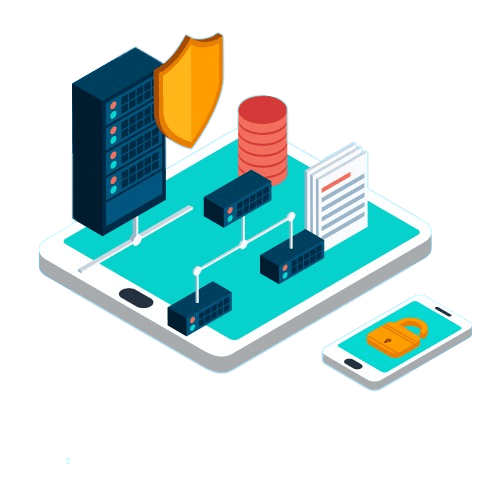
Concrete mobile endpoints for SaaS developers
Establish your SaaS brand as a pioneer in cloud data management with protection that delivers 360-degree coverage from mobile endpoint to backend, boosting customer trust in your platform and continued patronage.
The latest innovation in code encryption provides a holistic, top-down approach: autonomously scan and detect threats, monitor activity around your applications in real time and deflect oncoming threats through static and dynamic hardening.
Enterprise-grade mobile SaaS application security
Prevent data breaches, tampering and reverse engineering into fake apps, keep enterprise customers’ data safe, and create undeniable trust with state-of-the-art protection that does not add downtime or integration work.
Request a consultationBenefits for SaaS providers
Create confidence with security features your users can see, and evidence your enterprise buyers can audit.
Concrete mobile endpoints
360-degree protection from mobile endpoint to backend enterprise systems, boosting customer trust in your platform and continued patronage.
Make cloud data impenetrable
The latest code encryption in a holistic, top-down approach: scan, detect, monitor and deflect threats through static and dynamic hardening.
Create confidence with security features
Show users and prospects that your brand provides the highest level of security across your entire service offering, with no downtime or breaches.
Shorten enterprise security reviews
Documented runtime protection, anti-tampering and threat monitoring that answers security questionnaires and removes a common source of procurement delay.
Fits a multi-tenant architecture
Protection is applied to the app binary, so one protected app serves all tenants without per-tenant configuration.
Codeless, CI/CD-ready
Protection applied to the compiled build in your pipeline, so weekly releases ship protected without a separate security sprint.

Three solutions for the whole lifecycle

Assess before release
Automated vulnerability assessment against OWASP MASVS, with remediation guidance for every finding.
Explore IronSCAN →
Harden the binary
Multi-layer, codeless hardening: obfuscation, encryption, anti-tampering and RASP, applied to the compiled app.
Explore IronWALL →
Monitor in the field
Real-time detection and response across every session, with an audit-ready incident record.
Explore IronSKY →SaaS mobile app security, asked and answered
Why do SaaS providers need mobile app security beyond backend controls?
Backend controls protect your infrastructure, not your customers’ devices. A SaaS mobile app runs on unmanaged phones outside your perimeter, where attackers can decompile it, extract API keys and authentication logic, and use that knowledge to attack your backend directly.
What can an attacker learn from decompiling our mobile app?
Hardcoded API endpoints, authentication flows, encryption keys and business logic. The client is fully available to an attacker for offline analysis at leisure. Code obfuscation and runtime protection make that analysis substantially harder and detect tampering when it is attempted.
How does mobile app security affect enterprise sales cycles?
Enterprise buyers increasingly include mobile application security in vendor security reviews. Documenting runtime protection, anti-tampering and threat monitoring shortens questionnaires and removes a common source of procurement delay, often the difference between a deal progressing and stalling.
Does app hardening help with SOC 2 or ISO 27001?
It supports specific control areas rather than delivering compliance on its own. Runtime protection, tamper detection and monitoring map to access control, system integrity and monitoring requirements, and give auditors concrete evidence for the mobile portion of your environment.
How does this work with a multi-tenant architecture?
Protection is applied to the client application regardless of your backend tenancy model. One protected app serves all tenants without per-tenant configuration.
We ship weekly. Will this slow us down?
No. Protection is applied to the compiled app during your build with no source code changes, so it fits an existing CI/CD pipeline rather than requiring a separate security sprint.
Resources for SaaS security teams
 BlogDevSecOps: strengthening mobile app security in an evolving threat landscapeRead the article
 BlogHow mobile app security affects the organisation’s security postureRead the article
 BlogUnderstanding OWASP Top 10 and implications for your digital assetsRead the article
 WhitepaperRuntime Application Self Protection (RASP): the next step up to app securityRead the guide
 Success storyDetecting mobile app security gaps through vulnerability diagnosisRead the story

 Financial servicesIndustryFinancial servicesSee the industry
Ready to secure your SaaS mobile client?
From deployment to security and beyond, SecIron takes you from visibility to action. Bring us your app and we will show you what an attacker sees, then what they see once it is protected.
End-to-end mobile application security. Assess, harden and monitor Android and iOS apps with codeless integration.
